
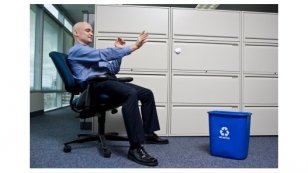
We all know how important it is to recycle waste products within the home environment. Why doesn’t this transfer so well to the workplace. The following guide is to help companies set up and create a recycling culture within the workplace.
Maybe the first question to ask is, as a business why should we recycle in the first place? Well the truth is it makes good business sense.They are easy to setup and runDepending on the volumes of waste and it’s value free collections are possibleEmployees, in general, would prefer to recycleIt has a profound and positive lasting effect on the environmentCreates a culture of efficiencyCost savings through reduction in waste disposalThe next thing to consider is what are you going to recycle and what can be recycled. In general most things do have an afterlife, here are some examples.Paper in the form of magazines, brochure, leaflets, junk mail and newspapersCardboard boxes and packagingDrinks and food cansPlastic bottlesShrink wrap plasticElectrical equipmentBatteriesFood waste
Setting up your recycling scheme
Who is going to take responsibility for the scheme and run it? Usually the reason most efforts fail is lack of ownership together with management backing.
Once everyone is pulling in the same direction things can start moving forward. Here we high light the path to success.
Choosing the right recycling partner
Before choosing any company to collect and process your waste, there are three things they must have to adhere to government legislation. They are a Waste Carriers Licence, Exemption Certificate or Waste Transfer Licence and a Combined Liability Policy. It can be confirmed quite easy by visiting https://www.gov.uk/find-registered-waste-carrier
Here is a checklist to follow to help you find the ideal partner.What types of material can they recycleAre the waste materials collected or do we have to deliver them to their facilities?How do they run their collection service, i.e., an on-demand service or a scheduled collection? Sometimes the collection can be based on the weight or volume of the collection.What type of bins or containers do they supply for collections? There may be a delivery and rental charge for these. You must also consider the amount of space you have inside or outside your building to store them.Generally, there are three types of collection service.1. You pay for the collection
2. You get your collections for free
3. You get a free collection and the material is rebated if it has a valueSometimes waste contractors are willing to collect mixed waste. Such as paper mixed with cardboard. Or some may only collect high-quality white grade paper.Finally be aware that you are legally obliged to comply with your ‘Duty of Care’ for waste you produce and pass on to be recycled.
Launching your schemeInvolvement and TrainingMake sure that your staff are happy to get involved and critically time has been taken to make the whole process easy for them to follow. Staff opinions and ideas must be considered and appropriately used to create a feeling of inclusion. Staff training on what can be recycled andwhere to put it is also important, using both visual and written indicators. At the start, it is a good idea to have all the bins clearly labelled to identify each waste stream.The LaunchBefore launching the recycling scheme, you must make sure all your bins, leaflets, labels and posters are in place. By using emails and staff information boards, you can start to convey the launch date to the staff. Once the scheme is up and running, it is important to continue to motivate staff by giving regular updates and progress reports on what has been achieved. This can be illustrated by a simple pie or thermometer chart.
 Knowledge
 News
 Updates